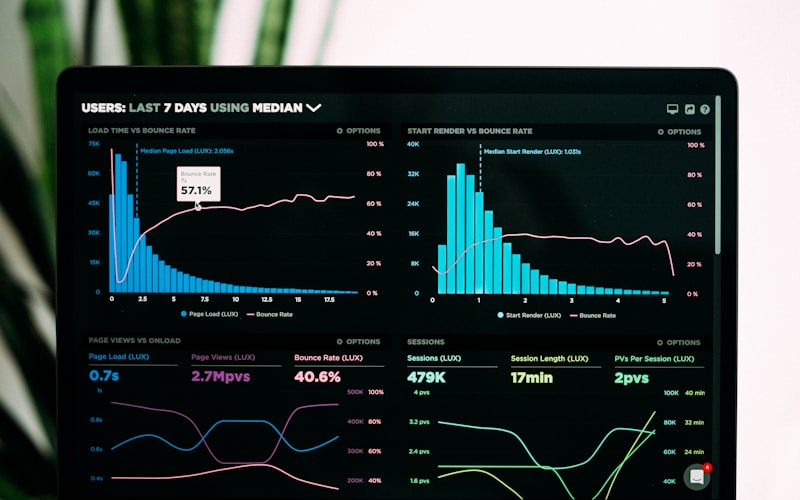
A 4PL technology stack is the integrated set of systems a fourth-party logistics provider uses to orchestrate a brand's entire supply chain: ERP, OMS, WMS, and TMS as systems of record, plus channel integrations, a unified data platform, AI decision engines, and a control tower on top. Two 4PLs can quote identical fulfillment rates and deliver very different results, because one orchestrates with connected systems and the other coordinates with spreadsheets and email.
This matters most for international brands entering the U.S. without a local team. You will not walk the warehouse floor or sit in the daily carrier meeting. Your entire view of the operation is mediated by software, so the quality of the 4PL technology stack is effectively the quality of your supply chain.
The money is moving accordingly. Gartner put worldwide supply chain management software revenue at 33.4 billion dollars in 2024, up 12.4 percent year over year, and forecasts spending on SCM software with agentic AI capabilities to grow from under 2 billion dollars in 2025 to 53 billion by 2030. This guide walks the stack layer by layer, then answers the question every brand eventually asks: build it yourself, or access it through a partner?
What is a 4PL technology stack?
A 4PL technology stack is the connected software environment a fourth-party logistics provider runs to plan, execute, and monitor a supply chain it does not fully own: multiple warehouses, carriers, marketplaces, retailers, and the brand's own systems, tied into one operating picture. Integration is the defining feature. A 3PL runs systems for its own buildings; a 4PL must also connect everyone else's.
That difference shapes the architecture. A 3PL stack is built around executing tasks inside four walls. A 4PL stack is built around moving data across organizational boundaries and turning it into decisions. In practice, a complete stack has five jobs:
- Record transactions accurately: orders, inventory movements, shipments, invoices
- Connect every node: warehouses, carriers, marketplaces, retailers, suppliers, and your ERP
- Unify data into one model, so a SKU means the same thing in every system
- Decide intelligently: forecasts, replenishment quantities, prices, and routings
- Expose everything: dashboards and alerts that give you real visibility from headquarters
Each layer below maps to one job. When you evaluate a 4PL, ask to see all five with live data. A features list proves nothing; screens with real order volume flowing through them prove a lot.
The five layers at a glance
| Layer | Function | Typical tools |
|---|---|---|
| 1. Systems of record | Record orders, stock, shipments, freight | NetSuite, SAP, Dynamics (ERP); Manhattan, Blue Yonder, Korber (WMS); Oracle TM, MercuryGate (TMS) |
| 2. Channel integrations | Connect marketplaces, retailers, carriers | Amazon SP-API, Walmart API, Target Plus, EDI networks (SPS Commerce, Orderful), carrier APIs |
| 3. Data platform | One model for SKUs, orders, inventory, cost | Cloud data warehouses, commerce data platforms |
| 4. AI decision engines | Forecast, replenish, price, route | Demand forecasting AI, pricing AI, route optimizers |
| 5. Control tower | Visibility, alerting, exception workflows | Real-time visibility platforms (project44, FourKites), operational dashboards |
How do the layers work together on a single order?
Trace one marketplace order through the stack and the architecture stops being abstract. The order arrives through the Amazon SP-API integration (layer 2) and lands in the OMS (layer 1), which checks inventory across warehouses and routes it to the node closest to the customer. The WMS directs picking and packing, and parcel routing logic selects the carrier and service level. Tracking flows back through the integration layer to the marketplace, while every event writes to the data platform (layer 3).
That record is where the compounding starts. The forecasting engine (layer 4) reads months of those events to predict next quarter's demand by region, and the control tower (layer 5) watches today's orders against those expectations, flagging anomalies - a stockout risk here, a carrier delay there - while they are still cheap to fix.
The lesson for evaluation: a stack is only as strong as its weakest handoff. Any gap between layers - an inventory feed updated nightly instead of continuously, a marketplace connected through manual CSV uploads - is where your orders will eventually get stuck.
Layer 1: Which systems of record anchor the stack?
Four transactional systems form the base. The ERP holds the financial truth: purchase orders, landed costs, invoices, and the general ledger. The OMS routes orders across channels and decides which warehouse fulfills each one. The WMS directs the physical work inside each building: receiving, putaway, picking, packing. The TMS plans and tracks freight between the nodes: carrier selection, rate shopping, tendering, and delivery confirmation.
Nothing above these systems can be better than the data they record, which is why unglamorous accuracy here beats clever dashboards everywhere else. An inventory count that drifts 2 percent in the WMS becomes a stockout the forecast never saw coming.
The market numbers show how central these systems have become. Mordor Intelligence values the warehouse management system market at 4.77 billion dollars in 2026, growing at 17.98 percent annually toward 10.89 billion by 2031. MarketsandMarkets sizes the transportation management system market at 18.5 billion dollars in 2025, headed to 37 billion by 2030.
The TMS layer is also where software returns are best documented. ARC Advisory Group research finds companies using a TMS save roughly 6 to 8.5 percent on freight spend, and Gartner surveys find users typically expect 5 to 15 percent yearly savings. For a brand spending 2 million dollars a year on U.S. freight, that range is 120,000 to 300,000 dollars from one layer of the stack.
What to check in diligence: does the 4PL run one WMS across its network or a patchwork per site, and does its OMS route orders across warehouses automatically, or does a person with a spreadsheet decide every morning?
Layer 2: How do marketplace and carrier integrations work?
Through two channels: modern APIs and old-fashioned EDI. Marketplaces expose APIs - Amazon SP-API, Walmart, TikTok Shop, Target Plus - that carry orders, inventory, and tracking in near real time. Big-box retail still runs on EDI documents: the 850 purchase order, the 856 advance ship notice, the 810 invoice. Compliance failures there turn directly into chargebacks that quietly eat margin.
Integration is the least visible and most expensive part of the stack. First-year EDI costs for connecting three retail partners commonly run 30,000 to 100,000 dollars with legacy providers, according to a 2026 Orderful pricing analysis, and the U.S. EDI software market alone reached 936 million dollars in 2025, per Market.us. In surveys of IT decision-makers, 63 percent say trading partner onboarding simply takes too long.
This is where 4PL economics genuinely differ from yours. The provider builds the Amazon, Walmart, Target Plus, and carrier integrations once, then amortizes them across every client. You inherit working connections instead of funding each one from scratch. The same logic applies to vendor and retailer document flows: EDI errors are cheaper to prevent at the orchestrator level than to dispute as chargebacks afterward.
Questions worth asking any prospective partner:
- Which marketplaces and retailers are already live, and how many clients run on each connection?
- How long does a new channel take to activate for an existing client?
- Who pays when a retailer changes its EDI specification, and how fast is the turnaround?
Layer 3: Why does a unified data platform matter?
Because five accurate systems can still disagree. The WMS counts units, the marketplace counts sellable listings, the ERP counts landed cost, and each calls the same product something slightly different. A data platform resolves those views into one model - one SKU, one inventory truth, one margin calculation - so every layer above it works from the same numbers.
Without this layer, the failure mode is familiar: three dashboards, three answers, and a weekly meeting spent arguing about which is right. With it, questions become queries. What is the true landed margin on this SKU at this retailer, net of chargebacks and storage? Which channel is actually profitable after freight? The answers exist in minutes instead of month-end.
This is the layer brands most often underestimate and 4PLs most often skip. Ask directly whether the provider maintains a commerce data platform with a unified SKU model, or whether integration means CSV exports emailed weekly. The difference determines whether the AI layer above it has anything trustworthy to learn from.
Layer 4: What does AI actually decide in a 4PL stack?
Today, mostly four things: demand forecasts, replenishment quantities, prices, and routings. The gains are best documented in forecasting. McKinsey research finds AI-driven forecasting reduces forecast error by 20 to 50 percent, cuts lost sales by up to 65 percent, and lowers warehousing costs 5 to 10 percent.
In practice, that looks like demand forecasting AI deciding how much inventory each warehouse needs before a seasonal peak, and pricing AI adjusting marketplace prices within guardrails as competitor moves and cost changes land. The next wave is agentic: Gartner expects 60 percent of enterprises using SCM software to have adopted agentic AI features by 2030, up from 5 percent in 2025, which explains the spending forecast of 53 billion dollars by 2030.
Two honest cautions. First, AI output quality is capped by layers 1 through 3: a model trained on inconsistent inventory data automates the inconsistency at scale. Second, AI-powered is currently the most abused phrase in logistics sales decks. Ask any vendor to show a forecast against actuals for a real SKU, with the error measured, before believing a word of it.
Layer 5: What is a supply chain control tower?
The visibility layer: a live view of orders, inventory, shipments, and exceptions across every node, with alerting and workflows to fix problems while they are still small. IMARC Group values the control tower market at 11.7 billion dollars in 2025, projected to reach 39.7 billion by 2034 - growth driven by exactly the multi-party supply chains a 4PL manages.
The test of a real control tower is not the dashboard; it is the exception workflow. A container is six days late. Does the system recalculate promise dates, flag the at-risk purchase orders, and propose a reallocation from another warehouse - or does it just turn a dot red and wait for a human to notice? For international brands, the control tower is also the time-zone bridge: it is how a team in Taipei or Munich checks the U.S. operation before the U.S. wakes up. For a deeper treatment, see our guide to end-to-end supply chain visibility.
Should you build or buy your 4PL technology stack?
For most international brands entering the U.S., buy the outcome rather than the components. Assembling the stack yourself means licensing four systems of record, funding every marketplace and EDI integration, hiring integration engineers and analysts, and spending 12 to 18 months before the first clean dashboard - all before the software does anything a customer notices.
What building actually costs, before the first hire:
- Software licenses for ERP, OMS, WMS, and TMS, each with its own implementation fees
- Marketplace API development and certification, repeated every time a specification changes
- EDI setup and mapping per retail partner, with ERP integration fees alone often running 2,000 to 10,000 dollars or more per connection
- A data platform plus the engineering to keep its pipelines healthy
- Ongoing maintenance: version upgrades, API deprecations, and retailer spec changes arrive on their schedule, not yours
A rough decision framework by stage:
- Under about 10 million dollars in U.S. revenue: run on marketplace-native tools plus your fulfillment partner's portal. A custom stack is overhead you cannot amortize.
- 10 to 100 million dollars, scaling: buy point systems only where you have real differentiation - often OMS and analytics - integrate conservatively, and resist custom middleware you will maintain forever.
- International, multi-channel, entering the U.S.: access the stack through a 4PL. You inherit the integrations, the data platform, and the AI layer on day one, priced across many clients instead of funded by you alone. The build-vs-buy question becomes a partner evaluation question.
The trade-offs of the partner route deserve equal honesty. You give up some control and customization. You must negotiate data portability up front, so your history leaves with you if you ever switch providers. And the partner's roadmap, not yours, decides which features arrive next quarter. Put data ownership and export formats in the contract, not in a verbal assurance.
How Pi-Commerce Helps You Run on a 4PL-Grade Stack
Pi-Commerce operates the full stack described in this guide for international brands in the U.S. market: systems of record connected to Amazon, Walmart, Target Plus, and Target DVS; a commerce data platform that keeps one version of SKU, inventory, and margin truth; and AI engines for forecasting and pricing feeding a control tower you can check from any time zone. You can explore the product platform to see how the layers fit together.
If you are weighing the cost of assembling this yourself against accessing it through a partner, talk to our team. We will walk you through the stack with live screens and real data, not a features slide.